
In Business and Life, the First Win Changes Everything
In the early 2000s, NVIDIA made chips for gamers. Fast graphics, smoother frame rates…solid tech, but not revolutionary. They weren’t trying to change the world.
But then researchers realized something: those same chips were perfect for training neural networks.
By the time the rest of the world noticed, NVIDIA had already earned the most important advantage: developer loyalty. Developers built tools on NVIDIA. Those tools drove adoption. Adoption generated revenue. Revenue fueled R&D. Better products won more developers.
That loop never stopped.
NVIDIA didn’t just win. They built a system that kept making them win.
By mid-2025, NVIDIA controlled over 80% of the AI chip market and became the most valuable company in the world.
Their success wasn’t just innovation, talent, and execution. It was structure. It was systems thinking in motion.
The System Behind the Success
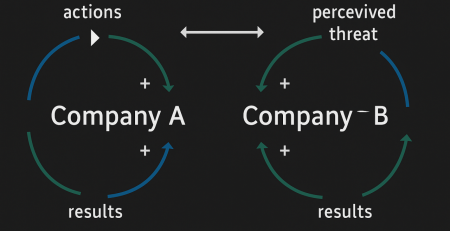
Peter Senge called this archetype Success to the Successful in The Fifth Discipline. Here’s how it works:
Two players start out. One wins early. That early win unlocks more resources, support, and trust. Those extra resources lead to more success. And the other player? Starved. Ignored. Falling further behind, not because they’re worse, but because they didn’t win first.
This system doesn’t reward “best.” It rewards first. It rewards compounding.
How It Differs from Other Systems
Last week, we explored Shifting the Burden. Where symptoms get treated instead of causes. It’s the story of chasing tactics instead of fixing strategy. It’s what happens when a business changes headlines instead of their offer. Or a person buys productivity apps instead of facing their fear of starting.
Before that, we explored Limits to Growth. The system where progress stalls because of friction, drag, or hidden friction. Push harder and get more resistance. The solution isn’t hustle. It’s diagnosis. You remove the bottleneck instead of muscling through it. Think “foot off the break before hitting the gas.”
But Success to the Successful? It’s different. It’s a system that accelerates itself. No friction. No drag. Just momentum, BUT for one player only in a given space.
Unless you’re the one feeding the loop, it starts working against you. It’s important to understand on a personal performance level and organizational level.
The System by Another Name
Sociologists gave this same system another name you’ve probably heard many times: The Matthew Effect. This comes from the Gospel of Matthew: “To those who have, more will be given. From those who have not, even what they have will be taken away.” The concept was popularized by Malcolm Gladwell in his book, Outliers: The Story of Success.
It sounds harsh. It doesn’t sound fair. We may not like it. But it shows up everywhere:
In Business:
- The software with early integrations becomes the industry standard. More tools are built around it, leading to more adoption and continued dominance.
- The product that ranks first on Amazon gets most of the sales. Higher sales lead to better reviews, which further strengthen its ranking.
- The consultant who lands a big-name client early gains instant credibility, which helps attract more high-profile clients.
- The VC-backed startup gets more media attention and public trust, regardless of whether it has the best product.
- The same feedback loop shows up in service businesses: The CPA who builds a simple tax guide gets shared among real estate groups. That attention leads to more referrals. Those referrals lead to more case studies. The loop feeds itself, not from paid ads, but from smart positioning and consistent follow-up.
In Personal Behavior:
- The team member who is praised early on is seen as a rising star and gets more support, mentorship, and opportunity.
- The student who struggles at the beginning is labeled as behind, which lowers expectations and reduces access to challenging material or encouragement.
- The habit that’s done even once—like showing up early—begins to shape a person’s identity and builds momentum.
- The person who speaks up confidently in early meetings is often viewed as a leader and gets more influence over decisions.
- The individual who repeatedly delays tasks begins to believe they lack discipline, which makes it easier to avoid future action.These are not just habits. They are feedback loops.
And all these dynamics reinforce themselves…quietly, powerfully, relentlessly.
Example of and Application to AI: It Isn’t Beating You. Feedback Loops Are.
AI models aren’t scary because they’re smart. They’re scary because they compound.
More users → More data
More data → Better performance
Better performance → More users
That’s a closed loop. And it feeds itself.
It’s not just about scale. It’s about system structure.
And if your system is feeding someone else’s loop, it doesn’t matter how good your product, message, or team is. You’ll lose.
Not because you’re worse. But because you’re not compounding.
Ask: What action created more trust? What message earned replies? What habit made future action easier?
Keep a simple weekly note: “What win created another win?”
Then repeat it. Success isn’t always visible immediately. But compounding is traceable…if you’re watching for it.
How to Leverage This System for Yourself or Your Business
If you’re trying harder and getting more and more push back think through the Limits to Growth lens. If you think you’ve identified a problem and you’re focusing all your effort to fix it without results try the Shifting the Burden lens. But here? You need to build your own feedback loop.
First, identify and map our your context, the playing field. Then start with a single win that can reinforce itself within that context. Here are some mixed examples:
- Land a high-trust client who brings more of the right clients.
- Focus on a specific message that earns follow-up questions and spreads.
- Develop a habit that strengthens your identity (e.g., “I don’t miss workouts”).
- Get your product to market sooner than planned and earn better positioning. Improve it as you go.
Feed it. Design for it. Make it automatic.
And just as important: Stop feeding the loop that works against you.
Personal Discipline:
- Don’t say “I can’t eat that.” Say “I don’t eat that.” Shifts you from external rules to internal ownership/ identity.
- Don’t say “I’ll try to work out tomorrow.” Say “I train daily.” Builds identity instead of relying on motivation.
- Don’t wait to feel ready. Act and prepare as if you already are. Confidence follows consistency, not the other way around.
- Don’t journal when you feel like it. Journal to feel like it. Habits aren’t about reflection. They’re about construction.
- Don’t check your phone first thing. Start your day by deciding who you are, not reacting to who the world tells you to be.
Marketing & Business Strategy:
- Don’t chase new tactics every month. Clarify your ideal customer and build everything to serve them better than anyone else.
- Don’t copy trending posts. Write and publish from your own expertise. That’s how trust compounds.
- Don’t wait for permission to pitch. Create offers so clearly valuable they feel like service, not sales.
- Don’t outsource your authority to algorithms. Teach what you know. Share what you’ve done. Repeat it publicly and consistently.
- Don’t market for applause. Market for alignment. Say things that attract the right people and repel the wrong ones.
NVIDIA didn’t become the most valuable company in the world by shouting louder. They became it by starting the loop early—and reinforcing it constantly.
You can do the same. If you feel behind you can still interrupt the pattern and start a new one. Identify the the smallest viable context/ market. Get some early wins. Keep feeding the loop.
The loop doesn’t need to be huge. It just needs to be yours. And it needs to reinforce the identity and impact you want to scale.
Watch out for the hidden resistance: Some people stop feeding their success loop not because it’s failing, but because they’re afraid of what happens if it works. More visibility. More expectations. More pressure.
If that’s you, name the fear. Then shrink the stakes. You don’t have to go viral. You just need to go consistent.
Work the system. Do the work. Stack up some wins and enjoy the momentum you create.
See you next Saturday.
PS – I hope you’re enjoying these posts. I write them to learn and remind myself of these things, but I hope they resonate with you as well. If you’re find them valuable let me know in the comments or send me a message!

Leave a Reply